Professionally installed interior drainage that manages groundwater and hydrostatic seepage before it reaches your finished floor or stored belongings.
The practical approach when exterior excavation is not feasible or needed.
All work is performed from inside the structure, preserving driveways, gardens, and exterior features.
Rather than waiting for water to accumulate, channel systems intercept it at the point of entry for immediate collection and removal.
Regardless of outdoor temperature or ground conditions, interior drainage installation moves forward on schedule.
Properly designed interior channel systems use gravity to route water to the sump pit without mechanical assistance, supplemented by the pump only when pit level reaches the activation threshold.
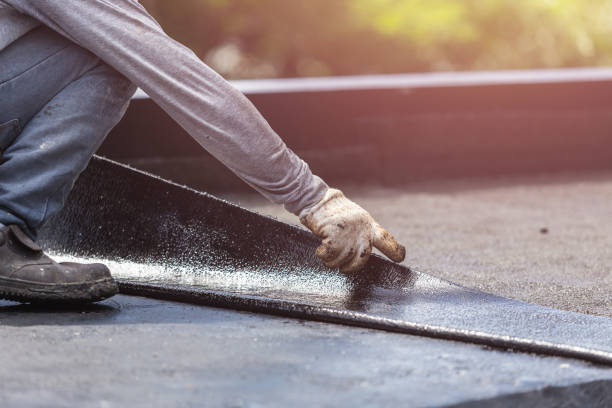
Interior drainage systems in Loveland are installed by saw-cutting a trench around the interior perimeter of the basement floor slab, typically four to six inches wide and deep enough to reach the footing level or just below the slab. This trench is the channel that collects water entering at the floor-wall joint and routes it by gravity toward the sump pit. The saw-cutting process is performed with diamond-blade equipment that produces a straight, controlled cut without excessive vibration damage to the surrounding slab. Dust is a natural byproduct of this process, and our crews use containment and ventilation practices to minimize spread to finished areas of the home.
Perforated channel systems offer specific advantages over simple gravel-and-pipe installations in Loveland basements with block or stone foundations. The channel profile is engineered to sit at the footing level where hydrostatic pressure concentrates, and the wall flange extension captures seepage that occurs at the bottom course of block rather than strictly at the floor-wall joint. This distinction matters because without the wall flange, water running down the interior wall face bypasses the channel and spreads across the floor before reaching the collection point. Proper channel specification requires understanding where the moisture entry is actually occurring, which the assessment process documents before any installation begins.
The sump pit integration is the component that makes an interior drainage system fully functional. The channel system routes water to the pit, and the pump removes it from the pit before it overflows. Pit location is determined by the channel routing geometry, existing pit locations if present, and access to a discharge route. In some Loveland homes where the basement has been partially finished, the channel must be routed around finished walls and mechanicals to reach an optimal pit location. These routing decisions are made during the assessment and documented in the installation plan. The pit itself is sized to provide adequate storage volume for the expected inflow rate, ensuring the pump is not short-cycling and the system has adequate buffer during peak inflow events.
The honest tradeoffs of interior drainage versus exterior waterproofing are something we address directly during every assessment in Loveland. Interior drainage is less invasive, faster to install, unaffected by seasonal weather constraints, and generally less expensive per linear foot than exterior excavation and membrane work. However, it does not eliminate the moisture that is contacting the wall surface; it captures and removes water after it enters the building envelope. For homeowners whose primary concern is protecting finished basement space from water accumulation on the floor, interior drainage addresses that objective effectively. For homeowners concerned about long-term wall deterioration from moisture contact, or whose walls show active spalling and efflorescence from chronic wet conditions, the exterior treatment addresses the wall moisture directly. When both conditions are present in the same structure, we discuss a combined approach that treats both the wall surface and manages floor-level seepage.
From perimeter channel installation to sump integration and annual service, a complete interior drainage solution.
Our full perimeter systems capture seepage from every wall section, routing it to the sump pit regardless of which foundation wall is experiencing the greatest inflow at any given time.
Learn moreFor Loveland homes where moisture entry is concentrated on one or two walls, targeted channel installation along the affected sections provides effective protection at lower cost than full perimeter treatment.
Get an assessmentBlock and stone foundations in older Loveland homes commonly show mid-wall seepage that bypasses floor-level channels without the wall flange extension. We specify this component when the assessment shows wall-face moisture migration.
Ask about wall flangesInstalling a new pit or relocating an existing one to optimize channel routing geometry and pump efficiency. Proper pit placement is the key to gravity-assisted drainage performance.
Plan your pit locationA drainage system that was properly installed years ago but has degraded can often be restored through cleaning and targeted component replacement at far less cost than a full reinstallation.
Schedule an inspectionExpansion scopes are common when a homeowner finishes additional basement space and discovers that the existing partial channel does not cover the newly used area.
Expand your systemFour stages from assessment to operational system, each one documented and verified before the next begins.
The assessment produces a written condition report that forms the basis for every specification decision in the installation plan. No work is designed without this foundation.
Diamond-blade equipment cuts the perimeter trench to specified width and depth. Cuts follow a planned route documented in the installation drawing, ending at the designated sump pit location. Dust containment is deployed to protect finished areas of the home during cutting.
Gravel bed placement, drainage channel positioning, wall flange installation where specified, and sump pit connection are completed in sequence. Channel slope is verified with a level to confirm gravity-assisted flow toward the pit throughout the entire system.
New concrete is poured over the channel system, restoring the floor surface and permanently enclosing the drainage installation. After cure, the full system is tested by introducing water at multiple points along the channel and verifying flow to the sump pit and pump activation.
Real words from real customers, after their first season with an interior drainage system installed.
I appreciated that the technician was honest about what interior drainage would and would not fix. He identified one wall crack above the floor joint that needed injection treatment, separate from the drainage install, and explained why. That kind of transparency makes a real difference.
From the assessment call to installation completion, everything was communicated clearly. The written proposal broke down every component and I understood exactly what was being installed and why before any work began.
The channel routing around our finished laundry room was handled cleanly. You cannot see where the channel runs under the new concrete. Professional work throughout.
Clear, direct answers from a drainage technician perspective, not a sales script.
The installation begins with saw-cutting the basement floor slab along the planned channel route, typically four to six inches from the foundation wall. The cut follows the interior perimeter of the basement and terminates at the sump pit location. Concrete is removed and the subbase is excavated to reach the footing level, then a gravel bed is placed, the drainage channel profile is set to slope toward the pit, and the wall flange is installed where specified. New concrete is poured to cap the system and restore the floor surface. Most residential installations in Loveland are completed in a single working day for standard perimeter configurations.
Interior drainage is a long-term system, not a temporary repair, when it is properly installed and the channel is correctly sized for the inflow volume. The channel system itself has no moving parts and requires no maintenance beyond occasional inspection. The gravel bed does not compact or break down under normal conditions. The drainage profile materials used in quality installations are rated for permanent soil-contact use. Systems installed decades ago continue to perform when the sump pump is maintained and the channel has not been blocked by slab settlement or debris infiltration.
We provide detailed written proposals for assessed conditions rather than phone quotes because every basement is different. We also explain whether the moisture pattern we observe is better addressed by interior drainage, exterior treatment, or a combination. Homeowners who understand the reasoning behind the recommendation make better investment decisions than those who receive a price without context.
Standard full perimeter interior drainage installation for a typical single-story Loveland basement is completed in one working day. Partial perimeter systems on one or two walls are typically finished in half a day. Basements with complex layouts, finished areas requiring careful routing, or multiple existing pipe penetrations crossing the channel path may extend the installation to a second day. We provide an accurate time estimate after the assessment so homeowners can plan for the dust and noise associated with saw-cutting, which is the most disruptive phase of the installation.
We offer annual drainage system inspection as part of our maintenance program in Loveland, which covers both the channel system condition and the sump pump. Catching issues like partial blockages or pump wear before they cause failure during a high-inflow event is the purpose of the inspection. Most homeowners find that scheduled annual service eliminates the reactive emergency calls that occur when a problem is discovered during a storm.
Many Loveland homeowners choose to address interior drainage before finishing a basement, which eliminates the need to remove and restore finished materials. However, we complete drainage installations in finished spaces regularly and coordinate the scope carefully to minimize disruption. The finished floor and base materials removed during installation can typically be sourced and replaced within the standard timeline of a moisture remediation project.
Our certified drainage technicians serve Loveland and surrounding Loveland, OH communities. Call today for a free on-site assessment.
Call +1-866-476-1348 for Assessment